





A backyard music studio can give you a place to write, record, and practice without disturbing the rest of the house. The best ones are not simply a shed with a guitar in the corner. They are designed around how you work, how much noise you make, and how comfortable the room feels when you sit down to play. This guide walks through the planning steps in a sensible order, from the first decision about space to the final touches that make the room worth spending time in.
Start With Your Goals and Space
Before you buy a single panel or insulation batt, decide what the studio is for. A room used for solo songwriting has very different needs from one used for drum practice or multi-track recording. Answering a few questions early will save money later:
- Will you mainly play quietly, such as acoustic guitar, keyboard, or vocals, or will you play loud instruments like drums and amplifiers?
- Do you need to keep sound in, keep outside noise out, or both?
- Will you record others, or just yourself?
- How many hours a week will you spend in the room, and in what seasons?
Your answers determine how much soundproofing you need and how much technical equipment should fit inside. Measure the available space as well. Many people find that a room around 10 by 12 feet is enough for a songwriting setup with a small desk, a couple of instruments, and a monitor pair, while a drum or band room needs considerably more floor area and stronger isolation.
Choose and Prepare the Structure
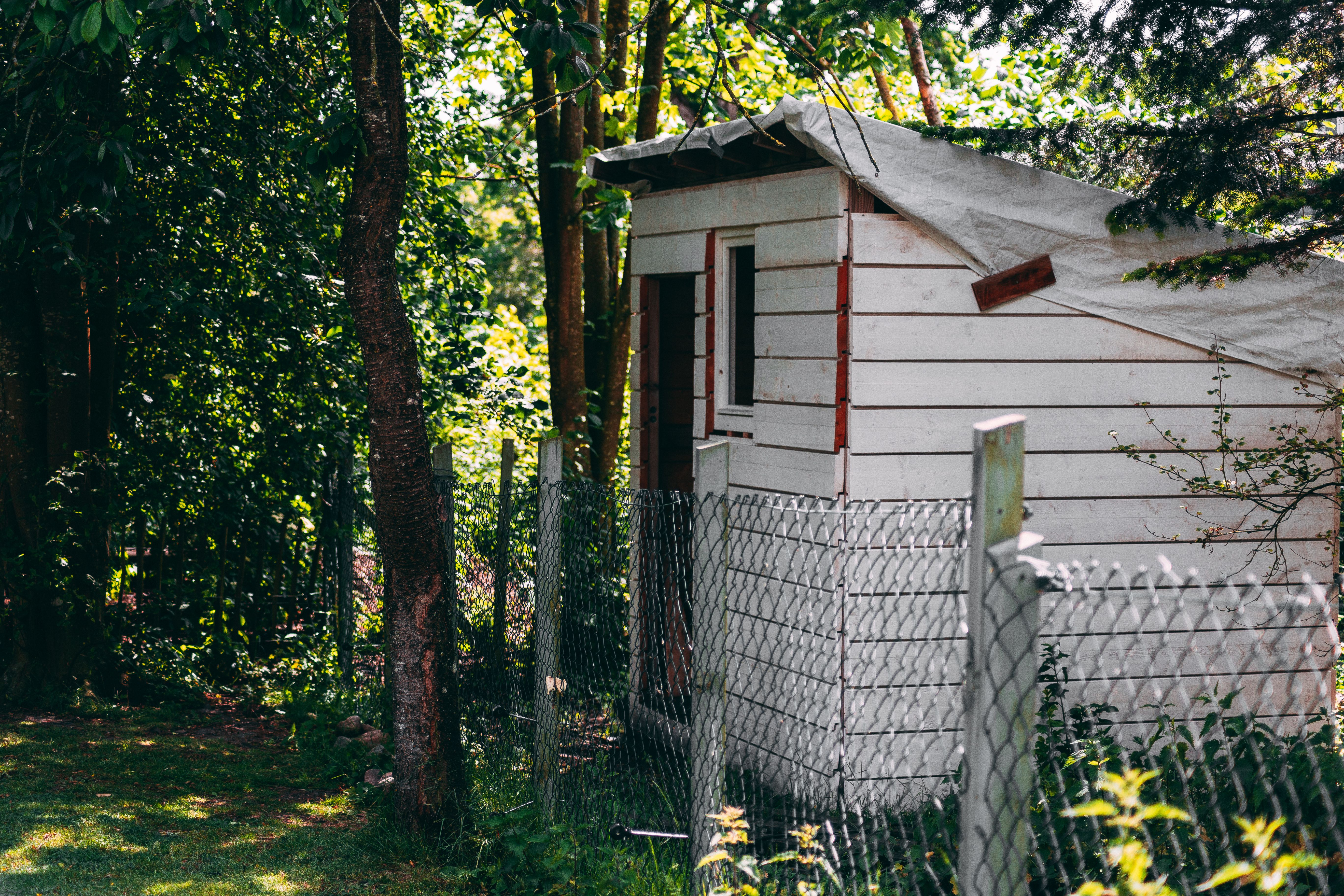
You can start with a prefabricated garden office, a converted shed, or a building designed from scratch. Whatever you choose, the structure should be solid, level, and dry. Lightweight walls with thin paneling transmit vibration easily, so the weaker the starting structure, the more mass and isolation you will need to add later. Check the following before you commit:
- The foundation is level and able to support the weight of the room and equipment.
- The roof does not leak, and any gaps around windows or doors can be sealed.
- The exterior finish is durable and suited to your climate. Options such as timber cladding can improve weather resistance and give the building a finished look.
- Local planning rules and noise ordinances allow the use you have in mind.
Keep Instruments Within Reach

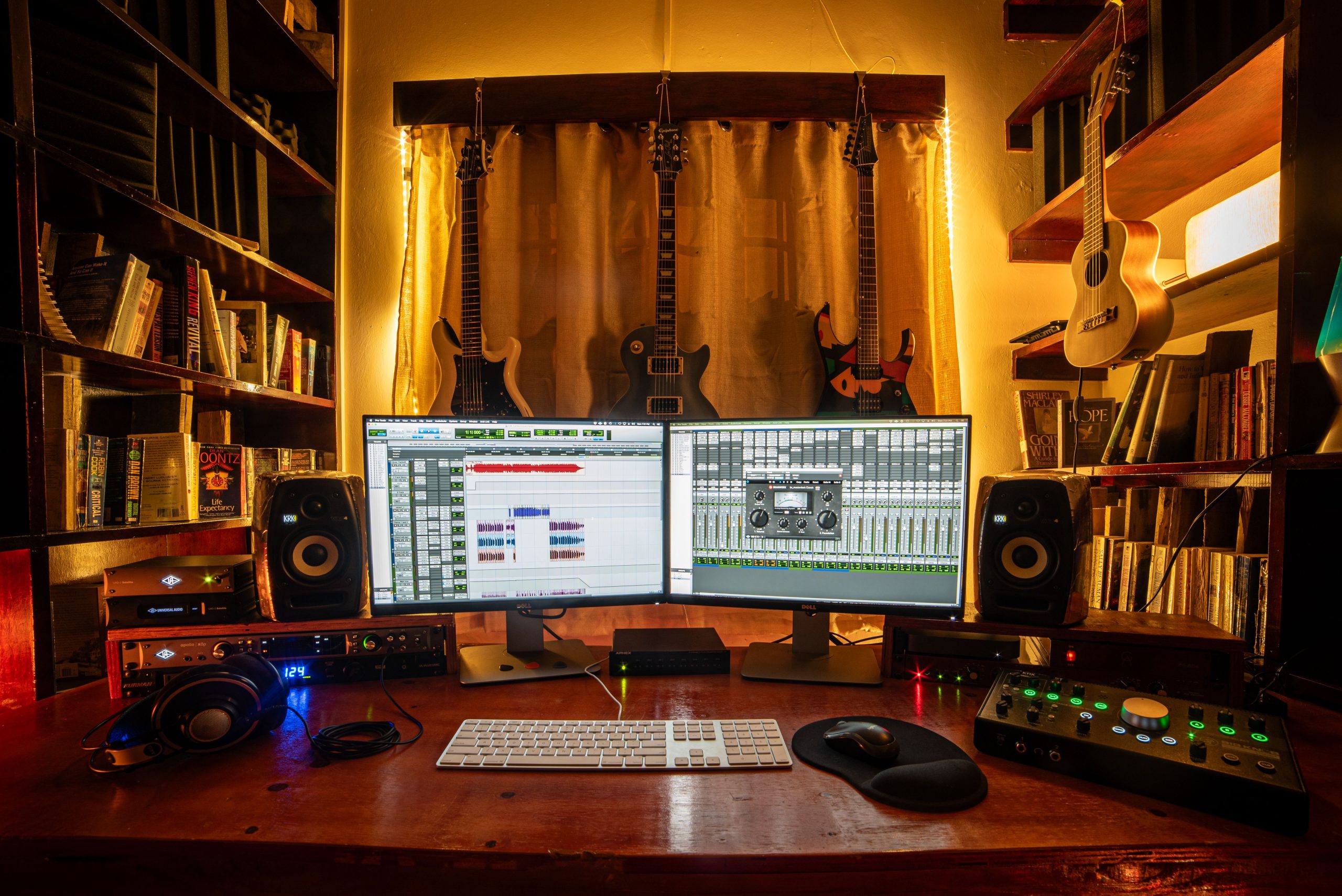
One of the simplest ways to make a studio inspiring is to remove friction. If an instrument lives in its case in the house, you will play it less often. Keep a few instruments on wall hooks or stands so they are visible and easy to grab. Portable and acoustic instruments such as ukulele, classical guitar, and hand percussion work especially well in a backyard room because they do not require much isolation and they encourage spontaneous sessions.
Think about storage too. A small cabinet or wall shelf for cables, picks, and notebooks keeps the floor clear and prevents the room from feeling like a cluttered workshop.
Soundproofing the Shell
Soundproofing is about three principles: adding mass, decoupling surfaces so vibration cannot pass straight through, and sealing every gap. Sound Engineering publications consistently point out that a room only performs as well as its weakest point, so a well-built wall paired with a hollow door will still leak. The table below summarizes the main materials and what they do.
For a deeper look at how these choices work together in a garden building, the editors at Sound On Sound’s guidance on soundproofing a shed studio explain why a heavy ceiling and doubled doors can matter more than people expect. Their advice on building the walls is a useful reference when you compare options:
- Plan for a heavy ceiling, typically two layers of board with dense insulation above.
- Consider a double door arrangement, with the two doors separated by the thickness of the wall.
- Avoid suspended office-style ceilings, which offer little isolation on their own.
Ventilation, Power, and Comfort
A sealed studio can become uncomfortable within minutes, especially in summer or in a small room with several people. Ventilation is not optional. The challenge is that every vent is also a route for sound, so the goal is to move air without letting noise follow it.
- Acoustic ducting: A lined duct with bends allows air to pass while absorbing sound.
- Mini-split air conditioning: A ductless unit needs only a small wall penetration and keeps temperatures stable.
- Dehumidifier: Controlling moisture protects instruments and electronics from condensation, particularly in winter.
- Electrical planning: Install enough circuits for amplifiers, computers, and lighting, and run cables through sealed conduit.
Lighting and comfort also affect creativity. Warm, adjustable lights are more relaxing than a single bright ceiling fixture, and a comfortable chair matters more than most people think when a session runs for two hours.
Acoustic Treatment and Room Modes

Soundproofing keeps sound in or out. Acoustic treatment changes how sound behaves inside the room, and it is a separate job. Once the shell is sealed, a room can still sound boomy, harsh, or muddy because of reflections and standing waves.
Room modes are the main reason. Every rectangular room has resonant frequencies tied to its length, width, and height. Acoustics researchers, including Ethan Winer in his writing on studio design, note that rooms with dimensions that are equal or simple multiples of one another produce uneven peaks in the low end. You will not usually have the chance to redesign the building, but you can still reduce the problem:
- Place absorbent panels at the first reflection points on side walls and the ceiling.
- Use bass traps in the corners, where low frequencies build up most strongly.
- Add diffusion behind the listening position to scatter reflections without deadening the room.
- Position speakers and your chair away from the walls where possible.
As a general rule, begin with absorption to control flutter echo and harsh highs, then add bass control. The difference between absorption and diffusion is worth understanding before you buy materials, because each does a different job.
Designing a Space That Invites Play

Technical quality matters, but atmosphere is what brings you back. A few choices that tend to make a studio feel inviting:
- Use natural materials such as wood and plants to soften the acoustic and visual feel of the room.
- Keep a notebook or whiteboard in sight, so ideas can be captured the moment they appear.
- Set up a single “ready” position for your main instrument so you can start in under a minute.
- Add a window view or a door you can open in mild weather, if your isolation plan allows it.
The aim is a room that you want to enter. A studio that is comfortable, organized, and easy to start will get far more use than a technically perfect room that feels like work.
Frequently Asked Questions
How big should a backyard music studio be?
A room of about 10 by 12 feet suits solo songwriting, recording vocals, and practicing acoustic instruments. Drum or full band rehearsal needs more floor area and stronger isolation.
Do I need soundproofing if I only play acoustic instruments?
Light isolation is still useful, especially for keeping sound from reaching neighbors late at night. Sealing gaps around the door and adding insulation is often enough for quiet instruments.
Is acoustic treatment the same as soundproofing?
No. Soundproofing blocks sound from passing through walls, doors, and windows. Acoustic treatment controls reflections and resonances inside the room.
Do I need air conditioning in a backyard studio?
In hot climates or during summer, yes. A sealed room heats up quickly, and a ductless mini-split is one of the quietest and most practical options.
A backyard studio is a long-term project, and it rarely needs to be finished before you start using it. Begin with a sound, dry shell and a single instrument on the wall, then improve the room as you learn where sound behaves well and where it does not. The studio that inspires you most is usually the one you have shaped around your own habits, so let each upgrade follow the way you actually play.