






Opening a music store is not only about stocking guitars, keyboards, or drum sets. The real foundation of a successful store is the infrastructure behind the sales floor.
Without the right equipment, even the best instruments become difficult to sell, protect, demonstrate, and service.
Customers judge a store not only by what is on the walls, but by how confidently the space operates.
Sound quality, security, comfort, workflow, and staff efficiency all depend on the right setup from day one.
Point of Sale and Admin Equipment: The Business Backbone
Every modern music store runs on a digital backbone. You cannot track inventory, sales, warranties, returns, or commissions manually anymore without creating chaos. A reliable point-of-sale system is the nerve center of daily operations.
At a minimum, you need a touchscreen POS terminal or computer, a barcode scanner, a receipt printer, a cash drawer, and a stable internet connection. Inventory software is just as important as the hardware.
It allows you to manage serial numbers on instruments, track fast-moving accessories like strings and picks, and monitor reorders automatically.
A laptop or office desktop for bookkeeping, supplier communication, marketing, and staff scheduling is also essential.
Instrument Display and Storage Systems
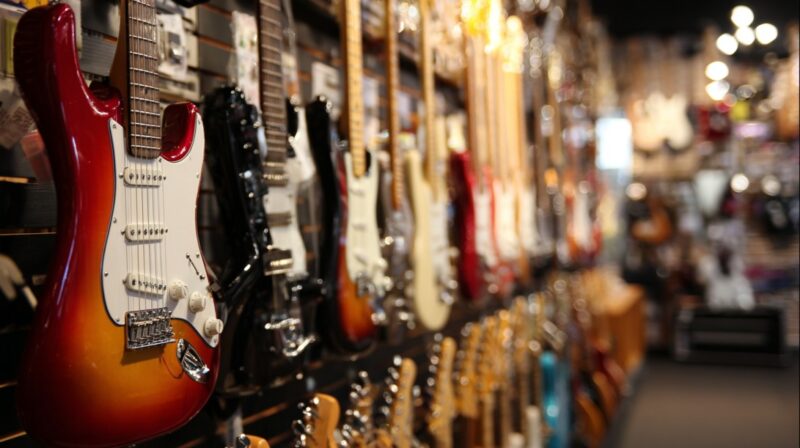
Instruments must be accessible without being vulnerable. Display hardware is not just about aesthetics. It is about loss prevention, damage prevention, and customer comfort.
Wall hangers for guitars and basses, secure keyboard stands, drum risers, and glass cabinets for high-value items like microphones or pedals are all core infrastructure.
Back-room storage is equally important. You will need shelving units for boxed stock, humidity-controlled cabinets for acoustic instruments, and padded storage racks for rental or repair items.
Improper storage ruins strings, warps necks, and devalues inventory silently.
Core Display and Storage Equipment
| Equipment | Purpose |
| Guitar wall hangers | Secure vertical display |
| Keyboard stands | Floor demos |
| Drum risers | Full kit presentation |
| Glass display cases | High-value accessories |
| Stock shelving | Back-room organization |
| Humidity cabinets | Acoustic instrument protection |
Sound Demonstration and Testing Zone Equipment
View this post on Instagram
Customers do not just look at instruments. They test them. If your store cannot support clean, controlled sound demonstrations, sales conversion drops immediately. Even beginner buyers rely on hearing before committing.
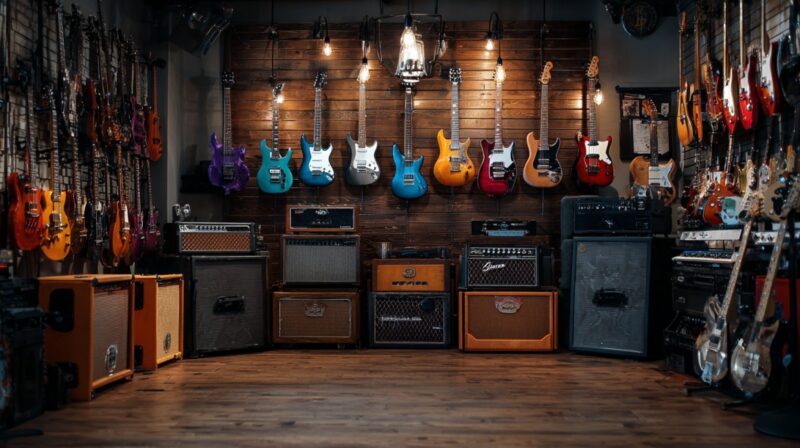
Every store requires at least a few small amplifiers for guitar and bass testing, powered speakers for keyboards, headphones for silent demo zones, and isolation pads to prevent excessive noise bleed. A small mixer is often needed for multi-instrument demos and clinic events.
Accessory and Repair Counter Tools
Accessories generate consistent margins and repeat visits. That section alone requires its own equipment. Pegboard walls, hooks, and small shelving displays are needed for strings, tuners, cables, straps, picks, reeds, mouthpieces, cleaning kits, and batteries.
If your store offers basic services such as string changes, setups, or small repairs, you will need a dedicated workbench with proper lighting, neck supports, precision screwdrivers, truss rod tools, electronic tuners, soldering tools, multimeters, string winders, and cleaning supplies.
Service capability immediately increases credibility. Even small in-house repairs keep customers returning instead of buying online.
Security Equipment: The Silent Profit Protector
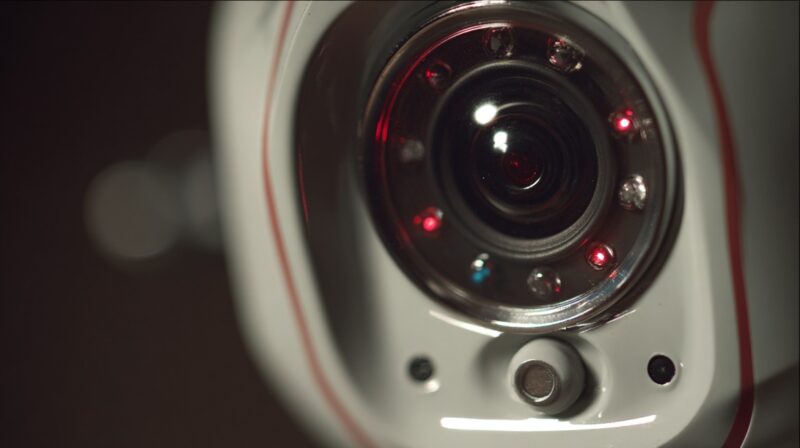
Music instruments are high-value, high-theft-risk products. A store without proper security will eventually lose inventory. This is not pessimism. It is statistics.
At minimum, you need a multi-camera CCTV system covering all entrances, the sales floor, the counter, and storage areas. Magnetic door sensors, motion alarms, and panic buttons behind the counter provide additional protection.
For premium instruments, locked wall mounts or display cases are strongly recommended.
Good security equipment does not interfere with the shopping experience. It simply ensures that your profit is not eroded in silence.
Customer Comfort and Store Atmosphere Equipment
Customers stay longer when they feel comfortable. Longer visits directly correlate to higher average transaction values.
Comfortable benches for instrument testing, stools near keyboard and piano sections, climate control for stable temperature and humidity, and acoustic treatment panels for sound control all influence buying behavior.
This is also where branding infrastructure enters: wall graphics, signage, digital displays for promotions, and background music systems.
Staff Operations and Training Equipment
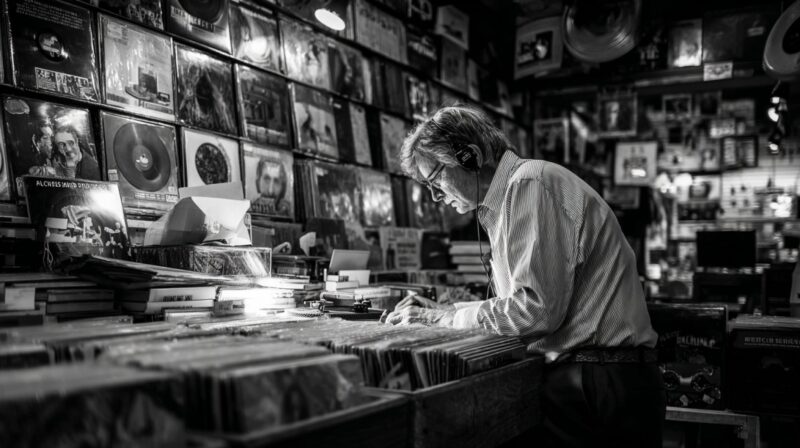
Behind the counter, your staff need a proper workspace. This includes desks, chairs, secure document storage, headsets for communication during busy hours, training screens for product education, and time-tracking hardware if required by law.
As your store grows beyond a sole-owner operation, structured leadership and oversight become just as important as equipment. Understanding how departments, responsibilities, and governance scale is critical at that stage.
Resources like the Ned Knowledge Centre provide valuable insight into how leadership structures evolve as retail businesses transition from founder-led operations into managed teams and multi-location models.
While not specific to music retail, the leadership principles directly apply as soon as staffing complexity increases.
Shipping, Receiving, and Online Order Fulfillment Equipment
Most new music stores today also sell online. That means packaging and shipping are not optional. You will need shipping scales, packing tables, label printers, protective packaging materials, instrument-safe boxes, and return processing space.
Online fulfillment often becomes the fastest-growing revenue channel, but only if your logistics equipment supports it efficiently.
Startup Equipment Budget Overview
| Category | Typical Startup Range |
| POS & admin systems | Medium |
| Display & storage | Medium |
| Demo & sound systems | Medium to high |
| Accessories & repair | Low to medium |
| Security systems | Medium |
| Customer comfort & lighting | Medium |
| Shipping & fulfillment | Low to medium |
Actual cost depends on store size, product focus, and local infrastructure.
What New Store Owners Most Often Get Wrong
Many new music store owners overspend on instruments and underinvest in infrastructure. They assume customers will “figure it out.” In reality, poor sound setup reduces confidence, weak security reduces profit, and inefficient back-room workflow slowly drains staff energy.
Conclusion
A music store is not just a showroom. It is a system of sound, security, workflow, demonstration, and service. The right equipment allows instruments to shine, customers to relax, staff to operate efficiently, and business owners to grow without chaos.
When the foundation is built correctly, revenue scales naturally. When it is not, even great instruments struggle to sell consistently.